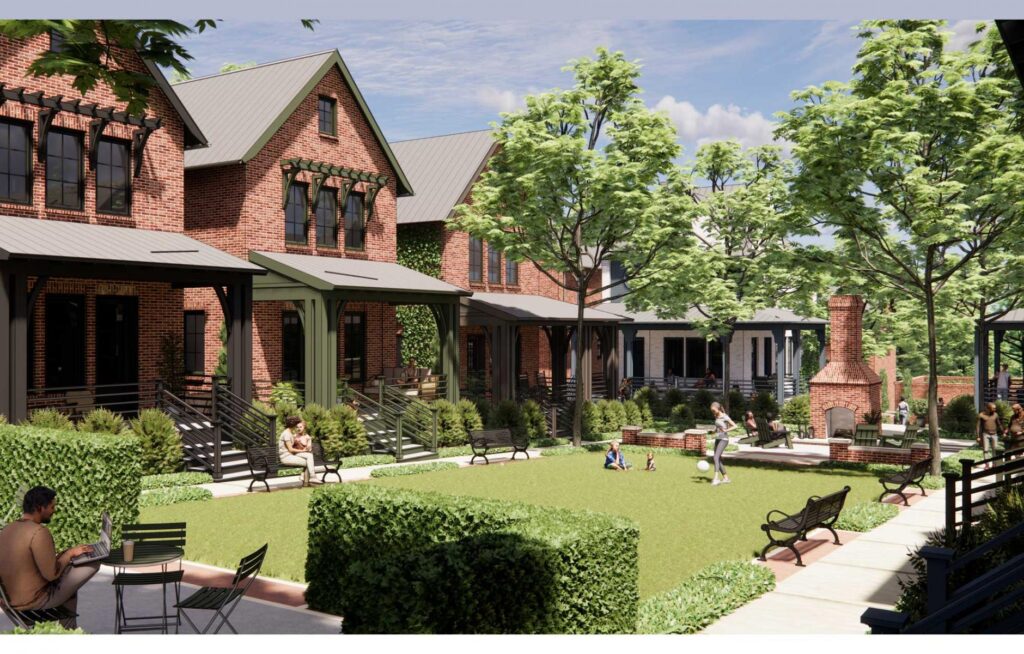
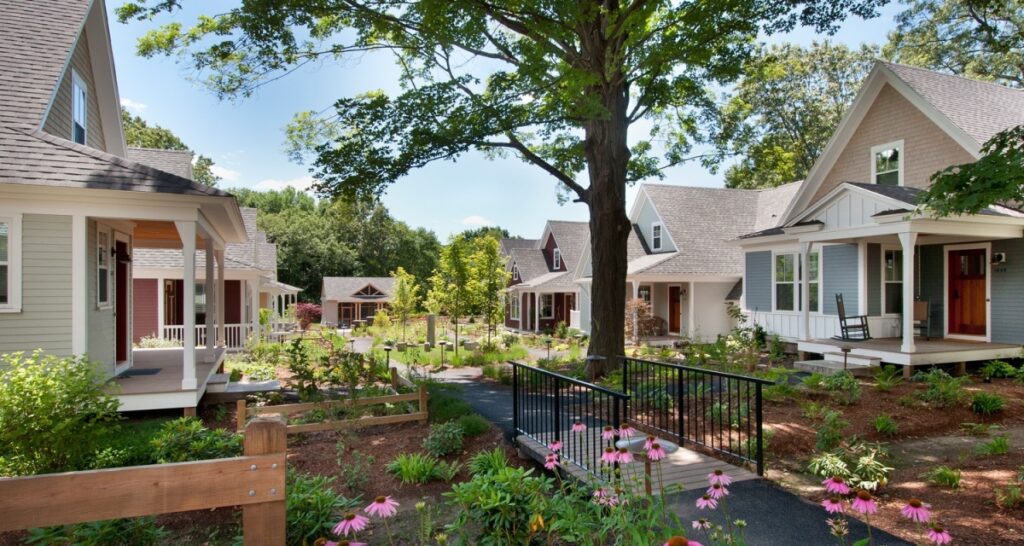
Pocket neighborhoods are clustered groups of houses or apartments gathered around a shared space — a garden courtyard, a pedestrian street, a series of joined backyards, or a reclaimed alley. They can be in urban, suburban, or rural areas.
Ross Chapin and Jim Soules developed the concept in 1996 in Langley, Washington. They designed the Third Street Cottages, a group of eight small homes clustered around a garden. According to Chapin: “They just seemed like jewel boxes; tucked away off of a busy street. And I said, ‘this is like a pocket neighborhood’.”
Successful pocket neighborhoods start with the central idea of a limited number of dwellings around a shared common. Beyond 8 or 12 units, the clusters should form around separate shared commons, connected by walkways.
Multiple clusters can form a larger aggregate community. These communities connect with and contribute to the character and life of the surrounding area.
Privacy. The houses ‘nest’ together: the ‘open’ side of one house faces the ‘closed’ side of the next. The open side has large windows facing its side yard, while the closed side has high windows and skylights.
Cars and traffic do not enter the shared pedestrian space. Although designs vary, some pocket neighborhoods have detached parking areas placed discreetly around the perimeter of the property.
The active rooms of the homes, including the porches, face the common space. The public and private space are layered and careful placement of windows helps ensure privacy.
At KIJIJI ATLANTA, your feedback and inquiries are invaluable to us. Our dedicated team is committed to providing the best possible service and support. Don’t hesitate to reach out.Together, we can make your experience even better!